
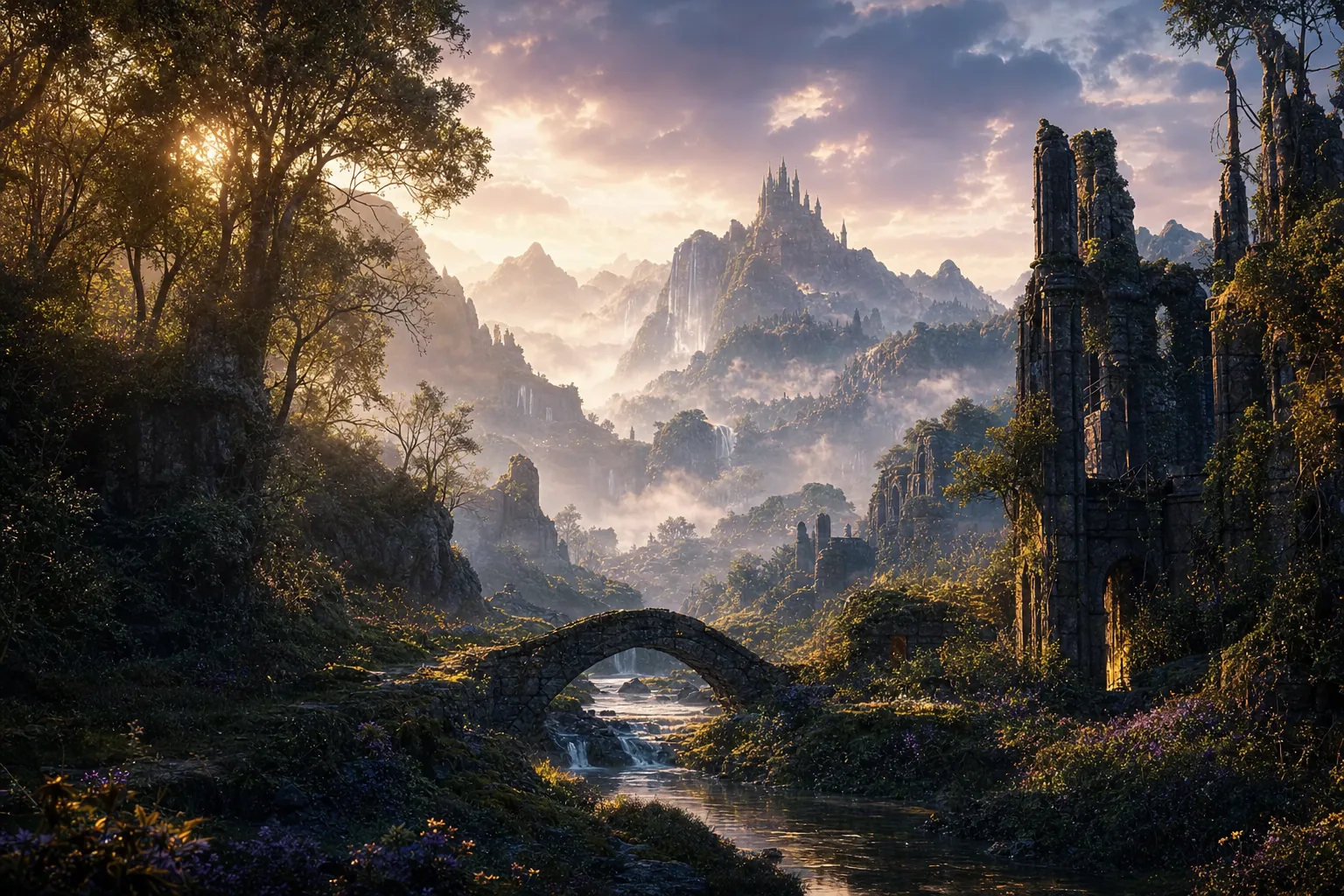
When readers pick up a fantasy novel, they're not just looking for a plot. They're looking for a world they can step into, one that feels real enough to explore, detailed enough to believe in, and rich enough to return to again and again. That's what immersive worldbuilding does. It transforms a story from words on a page into a place readers want to live.
Worldbuilding is the foundation of great fantasy fiction. It's the difference between a tale that entertains for an afternoon and one that stays with readers for years. Whether you're crafting your first fantasy world or analyzing what makes your favorite series so captivating, understanding how to create fantasy worlds that grip the imagination is essential.
What Makes Worldbuilding Immersive
Immersive worldbuilding goes beyond describing a setting. It weaves the world into every aspect of the story. The geography shapes character choices. The culture influences dialogue and conflict. The magic system has rules that matter. Readers feel the weight of the world because every detail serves the narrative.
Consider the worlds that have stood the test of time. Readers don't just remember the quests; they remember the smell of the taverns, the fear of entering forbidden forests, the awe of discovering ancient temples. These details create emotional connections that plot alone cannot achieve.
Great worldbuilding also establishes logic. Readers accept fantasy elements because the world operates by consistent rules. If magic exists, how does it work? What are its limits? If creatures are real, where do they live and why? When authors answer these questions thoroughly, the world feels authentic even when it's completely invented.
Building Believable Physical Spaces
Every world needs geography that matters. Mountains shouldn't exist just because they look cool. They should create boundaries between kingdoms, force characters to take longer routes, or hide secrets in their peaks. Rivers determine where cities grow. Deserts shape the culture of those who survive within them. Forests become characters themselves, beautiful and dangerous.
When you're learning how to create fantasy worlds, start with the physical landscape. Ask yourself:
- Why does the land look this way?
- How does the climate affect the people who live here?
- What resources are available, and how do they drive trade and conflict?
- What dangers are natural to this environment?
Details matter too. It's not enough to say a forest exists. Describe the light filtering through ancient trees, the undergrowth that makes travel difficult, the sounds that echo at night. These specifics make readers feel like they're actually walking through the world.
Creating Cultures That Feel Alive
Worldbuilding extends beyond landscape into the people who inhabit the world. Culture encompasses language, traditions, beliefs, values, and how characters interact with one another. It's what makes two fantasy worlds feel completely different even if they share similar geography.
Consider how cultures develop:
- Geography influences what traditions form and what stories are told
- Scarcity or abundance of resources shapes values and social structures
- History creates the conflicts and alliances of the present
- Religion or magic systems inform moral codes and rituals
- Language reflects what a culture cares about and how they see the world
When these elements align, readers believe the world. They understand why characters make certain choices and why conflicts arise naturally from the culture itself rather than from artificial plot devices.
Magic Systems That Drive the Story
Fantasy magic isn't just spectacle. The best magic systems have rules, costs, and consequences. They're not tools the author uses whenever the plot needs fixing. They're part of the world's physics.
When you establish how magic works, you create boundaries that force interesting storytelling. If casting a spell requires years of study, characters can't just magic away every problem. If magic demands a personal cost, using it becomes a genuine choice with weight. If magic is rare and revered, discovering it becomes significant.
The most immersive fantasy worlds treat magic as seriously as any other system. Readers notice when the rules change or when magic solves problems too easily. Consistency here separates worlds that feel alive from ones that feel convenient.
History and Its Echoes
Every fantasy world has a past, and that past shapes the present in countless ways. Ancient wars leave ruins and lingering grudges. Lost civilizations hide secrets and artifacts. Old prophecies influence how characters interpret events. The best worldbuilding layers history throughout the narrative.
Readers don't need to know every detail of what happened centuries ago, but they should sense that the world has depth. A crumbling fortress suggests stories of conflict. A forbidden artifact hints at ancient power. A cultural taboo reflects something that went wrong long ago.
History also creates texture. It explains why certain locations feel different from others, why some characters hold old prejudices, and why the current political landscape exists. When readers understand the historical weight behind present conflicts, those conflicts become more meaningful.
Bringing Your World to Life
Immersive worldbuilding isn't about exhaustive detail. It's about choosing the right details to share with readers at the right moments. Show enough that readers can visualize the world and understand its logic. Leave room for imagination. Let readers fill in some blanks themselves, which deepens their connection to the story.
The goal is to create worlds where readers don't just follow a character through events. They explore alongside the character, discovering the world's secrets, understanding its dangers, and becoming invested in its future. That's when worldbuilding becomes truly immersive.
Why This Matters to Readers
Fantasy readers crave escape and wonder. They want to experience worlds beyond their own, complete with their own rules, cultures, and histories. When an author invests in immersive worldbuilding, they're offering readers the most precious gift fiction can provide: the chance to be somewhere else, to see through different eyes, and to live another life for a while.
Readers return to books and series because of how the worlds make them feel. They recommend stories to friends because they want to share the experience of exploring those worlds together. The most beloved fantasy series across all ages share one thing in common: worlds so rich and detailed that readers never want to leave them.
If you're looking for fantasy stories that transport you to fully realized worlds with strong characters and genuine stakes, explore the award-winning fiction that spans epic adventures, heartwarming romance, and thrilling mysteries. Great stories start with worlds worth getting lost in.