
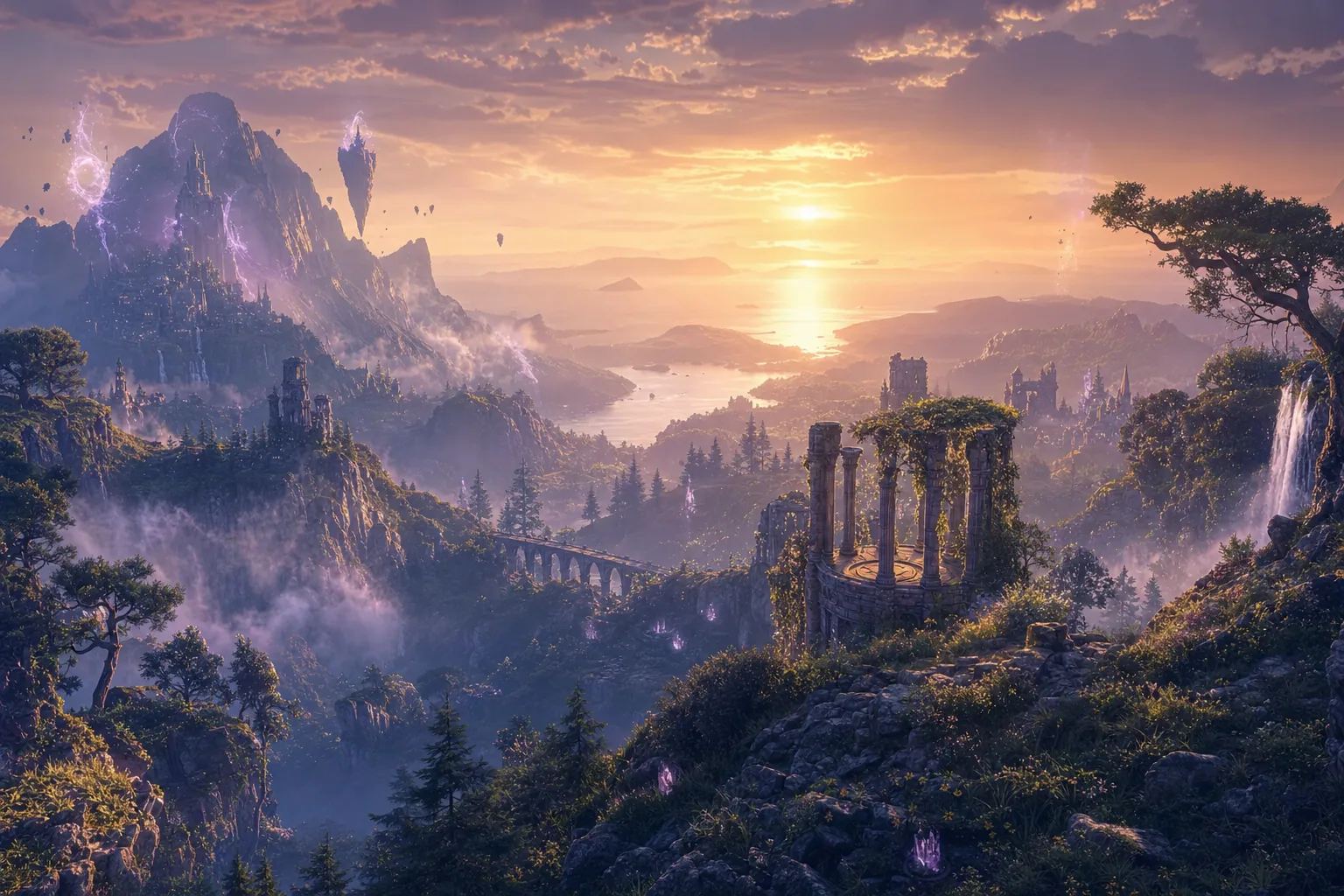
When you open a fantasy book, the first thing that pulls you in isn't always the plot or even the characters. Often, it's the world itself. A well-crafted fantasy setting becomes as real to readers as the place they live, complete with its own history, magic systems, politics, and geography. The best fantasy worldbuilding feels inevitable, as if the author simply discovered a place that already existed.
Worldbuilding is what separates a forgettable fantasy story from one that stays with readers for years. It's the foundation that allows characters to grow, conflicts to escalate, and emotions to land with real weight. When an author invests in creating a believable, intricate world, readers believe in everything that happens within it.
What Makes Fantasy Worldbuilding Stand Out
The strongest fantasy worlds share a few key qualities. They're internally consistent, meaning the rules of magic, society, and nature don't shift just because the plot needs them to. They have history, depth, and a sense that life existed in this world long before the reader arrived. Great worldbuilding also ties directly to character and conflict, rather than existing as decoration.
Consider what separates the fantasy worlds readers remember. They're not just visually stunning, though they often are. They make sense. A reader can imagine how people live, what they eat, how they communicate, and what they value. The geography influences the culture. The magic system has limitations. Politics feel real because they're rooted in how resources are distributed and how power flows.
The Role of History and Mythology
Every great fantasy world has a past. Sometimes readers learn this history gradually, woven into dialogue and discovery. Sometimes there are ruins, artifacts, and legends that hint at what came before. This layering makes a world feel ancient and real.
Mythology and lore give a world texture and resonance. When readers understand the origin stories of a place, the religions its people practice, and the heroes its culture reveres, they connect more deeply to that world. They see how current events echo the past and how characters inherit both power and burden from history.
Magic Systems Need Clear Rules
Magic often defines a fantasy world, but magic without limits can undermine tension and believability. The best fantasy authors establish how magic works, what it costs, and what it cannot do. This creates real stakes.
Readers should understand:
- How magic is accessed and learned
- What limitations or costs magic carries
- How magic shapes society and power structures
- What counts as impossible or forbidden
When magic has rules, it becomes a tool characters must navigate skillfully, not a plot convenience that rescues them whenever needed.
Geography and Culture Connection
Fantasy worlds feel alive when geography directly influences how people live. Desert kingdoms develop differently than island civilizations or mountain settlements. Climate, resources, and terrain shape everything from food and clothing to values and conflict.
Think about how geography might influence your favorite fantasy stories. Trade routes determine power. Mountains create natural borders and isolated cultures. Forests hold secrets. Rivers connect communities or divide them. When a reader understands these connections, the world becomes three-dimensional rather than a flat backdrop.
Character Development Within the World
The strongest fantasy worldbuilding doesn't just create an impressive setting, it creates the conditions for compelling character arcs. Characters inherit positions, values, and conflicts from the world they live in. A character born into nobility faces different challenges than one born into poverty or servitude. A world with oppressive magic systems creates characters shaped by resistance or acceptance.
When worldbuilding is excellent, readers understand why characters make the choices they do, even when those choices are difficult or tragic. The world isn't just where the story happens, it's what makes the story inevitable.
Learning From Award-Winning Examples
Some of the most celebrated fantasy series stand out precisely because of their worldbuilding. Works like the Gods and Guardians series demonstrate how blending sci-fi and fantasy elements, combined with immersive world-building and strong character development, creates stories that resonate across generations. These narratives transport readers through carefully constructed worlds where every element serves the larger story.
When you read fantasy with exceptional worldbuilding, you're not just following a plot. You're exploring a place so richly imagined that you can almost hear it, smell it, and feel its history on your skin. That's the power of authors who take worldbuilding seriously.
How to Recognize Great Fantasy Worldbuilding
When you're selecting your next fantasy book, look for these signs of strong worldbuilding:
- The world feels like it exists independent of the protagonist's story
- Details appear consistently and serve a purpose
- Magic or technology is used with restraint and consequence
- You learn about the world through what characters do and say, not through information dumps
- Different regions or cultures feel distinct and believable
- The author trusts readers to piece together larger truths gradually
A book with truly exceptional worldbuilding might even inspire you to research the author's process or creative decisions. Many readers find themselves wanting to return to these worlds again and again, and that desire speaks to how deeply the author has built them.
Fantasy worlds with strong worldbuilding offer readers more than entertainment. They offer escape, wonder, and the deep satisfaction of exploring somewhere new. The next time you pick up a fantasy book, pay attention to how the author builds the world. You might discover that the setting itself is the story you've been waiting to experience.